Wednesday, March 9, 2011

Character Description

Character Description

Mr. Bennet- Mr. Bennet is the patriarch of the Bennet family. He is the father of five daughters, Elizabeth, Jane, Lydia, Mary and Cathrine. He has a very humorous however sarcastic character which his wife dislikes very much. Of all of his daughters he loves Elizabeth the most. When his wife tries to wed his daughters, he stays clear of the activities.
Mrs. Bennet- Mrs. Bennet, the wife of Mr. Bennet, belives her only purpose in life is to wed her five daughters. However, because of her crude behavior, she often repels the persons who are interested in her daughters.
Mr. Darcy- Mr. Darcy is a wealthy man, a friend of Mr. Bingley, the master of Pemberley and the nephew of Lady Catherine de Bourgh. He was so filled with pride that he unknowingly looked down on other persons in the society. As the novel progresses, he becomes conscious of his behavior and begins to admire Elizabeth for her strong character.
Mr. Bingley- Mr. Bingley is a wealthy, handsome man who's purchase of the Netherfeild is what the novel is built upon. His character, however contrasts with his friend's Mr. Darcy which makes the single females in the town interested in having him for a husband.
Mr. Collins- Mr. Collins is a pompous fellow who is in line to inherit the Bennet's property. His social status is  none really of mention but he enjoys letting people know that Lady Catherine de Bourgh is his patroness.
Jane Bennet- Jane is the eldest of the Bennet sisters and is considered the most beautiful. She is more reserved and gentler than her sister Elizabeth. Her encounter with Mr. Bingley significantly contrasts with her sister Elizabeth's encounter with Mr. Darcy.
Elizabeth Bennet- Elizabeth is considered the protagonist of the novel. She is the second daughter of the Bennet family and is also the most intelligent of the four sisters. Her witty character and quick tongue sometimes prove too sharp for her own good. However, after she realizes Darcy's goodness eventually triumphs over her first prejudice feelings against him.

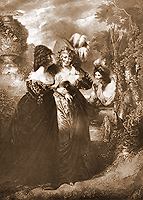
Wednesday, November 24, 2010

Summary from Act 1 through to Act 3

Act One
In Act 1, Leonato, his wife Innogan, his daughter Hero and his niece Beatrice along with a messenger enter discussing the recent war. In more detail, Leonato and the messenger talks about the war and how Don Pedro bestowed much honor to a male called Claudio who fought well. However, in Beatrice's interest is none other than a Signor Benedict whom, it is shown to the audience, she dislikes because of their different views on love. She constantly insults him names while conversing with others and also to his face. They both insult each other to a point where they think that they have become bitter enemies.After Leonato and his family left, Claudio confides in Benedict and Don Pedro about his feelings for Leonanto's daughter Hero. Benedict does not like the fact that Claudio is in love but Don Pedro is very much interested and wants his love to prosper. They devised a plan that at a masked ball that was planned, Don Pedro would pretend to be Claudio in order to woo Hero and they would eventually marry. 
Leonato and Antonio, brothers, converse where Antonio tells him of the plans that Don Pedro and Claudio made.  Though some thought of this as good, Don John, Don Pedro's bastard brother, upon learning of their plan, thought of a plan of his own to ruin his brother.

Act Two
After Leonato inquires about Don John upon him  not showing up at dinner after being invited, a conversation is mounted up upon the looks of Don John by Beatrice. This ultimately turns into her insulting Benedict, comparing him to Don John. Her father, Antonio shares his fears that his daughter is cursed because of her hatred to love. Even Leonato tries to convince her without success.
Don  Pedro, Claudio, Benedick and Balthasar enter as well as Don John, Borachio to the masked ball. Don Pedro insists that he take Hero for a  walk. Balthasar and Margaret, gentlewoman attending to Hero, also have a discussion on love. And Antonio denies that he is in fact Antonio to another gentlewoman to Hero, Ursula but she is convinced that he is Antonio.Meanwhile, as has become the norm, Beatrice and Benedict seems to find something to disagree upon however, she knew that it was Benedict himself and decided to play along with his little game. Everyone else went dancing and Don John and Borachio devised their plan and approached Claudio, knowing that he was very well Claudio, pretending to be Benedict. They explain that Don Pedro is in love with Hero and plans to woo her for himself. Claudio believes and is so upset that he thinks that he is no longer in love with Hero. Claudio does not even want to speak with Benedict. Benedict explains to Don Pedro that Claudio seemed very sad and left because he thought that Don Pedro was wooing Hero for himself. But he assured Benedict that it was only for Claudio. He also said that Beatrice told a fellow whom she danced with of "bad Benedict". Benedick is so outraged at seeing Beatrice that he asks Don Pedro for a transfer out of his command. When he is turned down, he leaves the scene. Beatrice brings Claudio to Don Pedro and hints at jealousy as the root of Claudio's anger. Don Pedro explains that he wooed Hero in Claudio's name and that all marriage arrangements are made. Hero and Claudio kiss and become a happy couple. Don Pedro asks Beatrice to marry him, but she turns him down by saying that his position in life is too great for her. She does not want to marry a prince. She wishes her cousins happiness and leaves. Don Pedro decides that Beatrice and Benedick are a perfect match for one another, for they are both stuffed with a large tongue and quick wit.

Act Three
Hero, Margaret, and Ursula plan to begin their manipulative work on Beatrice. Hero tells Margaret to run and get Beatrice to come to the orchard so that she will overhear her conversation with Ursula. Hero and Ursula begin to speak of Benedict and his great name and excellent virtues. Hero says that she can never tell Beatrice of his love for her because she is unable to love. Hero says that she will try to convince Benedick not to love Beatrice because Beatrice is too witty and strong to love another.  Claudio, Benedick, and Leonato discuss the prince's visit in Leonato's house. Benedick tells the men that he is changed. Don Pedro and Claudio tease him and question him until they realize that he is in love. They mockingly express shock at this sworn bachelor's new passion for a woman. Benedick leaves with Leonato to discuss Beatrice's betrothal. Don John lies to Pedro and Claudio about Hero's supposed disloyalty. He tells them about Hero's affair with Borachio and pretends to show feelings. They decide if John is correct about Hero's disloyalty, then Claudio and Don Pedro plan to disgrace her in public at the wedding in the next morning.

Wednesday, November 17, 2010

Questions on Much ado about nothing

1. Don John vowed to overthrow his brother Don Pedro and ruin the plans that Don Pedro and Claudio made to woo Hero.
2. Claudio is in love with Hero, the heir to Leonato.
3. Beatrice and Benedict both thinks that love is a waste of time fro them both.
4. The plan executed by Don Pedro was to pretend to be Claudio and woo Hero in order for her to get married to him (Claudio).

Wednesday, November 10, 2010

The life and tines of William Shakespeare


The Early years of William Shakespeare
William Shakespeare was born in Stratford-Upon-Avon which was in Warwickshire County and is said to have been born in April 1564. This was so because in the Elizabethan era,one was baptized three days after being  born. Shakespeare is said to be baptized on the 23rd of April 1564, therefore he was suspected of being born on the 20th of April 1564 (however this was not confirmed).  In Latin, his name was Guilielmus Filius Shakspere. It means William, the son of Shakespeare. He was the third of seven children born to John Shakespeare and Mary Arden. John Shakespeare was an official local businessman who made gloves and purses. He was also involved in local politics. His mother Mary Arden, was the youngest daughter born to her parents, and inherited much of her father's land owning and farming estate when he died. There were no known records of Shakespeare attending school because only the names of wealthy individuals were recorded. However, it is assumed that Shakespeare attended the King's New Grammar School, because there, male students of Stratford-Upon-Avon normally attended. Because of this, there was a debate which was based on his very existance.


William Shakespeare's love life and children
In 1582 William Shakespeare got married to a woman named Anne Hathaway. A bond certificate dated 28th November 1582 suggests that 18 year old William married his older spouse Anne who was a 26 year old pregnant woman. Almost seven month after they had their first child together, Susanna. Records show that she was born in May 1583. In February 1592, it is shown that together, the Shakespeare's had Hamnet and Judith, the twins. However, sadly, Hamnet, Shakespeare's only son died in 1596, at the tender age of 11.  Anne never left Stratford-Upon-Avon and lived there for her entire life. 


 William Shakespeare and his work
In 1609, Shakespeare's sonnets were published without permission. It is considered unlikely that he wanted many of his deeply personal poems to be revealed to the outside world. It was not however the first time; in 1599, in a collection entitled "The Passionate Pilgrim" , two of his poems had been printed without Shakespeare's permission.
Records with the College of Heralds, reveal Shakespeare applied for a coat of arms. Despite a lack of proof, he was granted his request. Later in 1599 he applied for his mother’s coat of arms to be added to his own.
At age 15, Shakespeare purchased the New Place. This was one of the most prominent and desired properties in all of Stratford-Upon-Avon being the second largest house in town; the first one being the mayor's. Given his father's known financial hardship from 1576, Shakespeare must either have used his own money to buy this expensive property or his father had placed money in his son’s name. It is possible that Shakespeare might have bought this prominent property with money from his plays. It is estimated that roughly fifteen of his 37 plays would have been written and performed by 1597. Shakespeare is estimated to have written 42 plays not including his other work which included almost every aspect of human experiences. Such are comedy, tragedy, history, and poetry.

William Shakespeare: The greatest playwright
Shakespeare's works have been a major influence on subsequent theatre. Not only did Shakespeare create some of the most admired plays in Western literature, he also transformed English theatre by expanding expectations about what could be accomplished through characterisation, plot, action, language, and genre. His poetic artistry helped raise the status of popular theatre, permitting it to be admired by intellectuals as well as by those seeking pure entertainment. Shakespeare died on

The Elizabethan era
This is the era of the reign of Queen Elizabeth (1558-1603). During her reign,the graphic arts, theatre and literature flourished. William Shakespeare was the most famous writer in this time. It was the age of expansion  and exploration abroad. This period is highly viewed because of the periods before and after. England was a centralized well-organized and effective government during this period. Economically the country began to benefit greatly from this highly favored era.

The Global Theatre
A theatre in London associated with William Shakespeare. Built in 1559, by Shakespeare's playing company, the Globe theatre was destroyed by fire on the 29th of June 1613. A second Globe theatre was built on the same site by June 1614 and was officially closed in 1642. Shakespeare's theatre group was called the "King's Men", and extract from the Globe theatre. Thomas Green wrote an article on Shakespeare saying that he was an "upstart pro who wanted to 'Shakescene'. A modern reconstruction of the theatre renamed "Shakespeare's Globe" was built and opened in 1997.  


Wednesday, November 3, 2010

Questions on Brother Man

1. Some conflicts in Brother Man are:

  • between Girlie and Papacita. From the beginning through to the end of the novel we are shown that they were so much in love that they ended up disliking each other causing disharmony between them. Girlie would not give in to Papacita's commands and he would not back down.
  • between Brother Man and Bra' Ambo. It was clearly shown that Bra' Ambo disliked Brother Man because he refused to hide his 'things' from the police. From that time onwards, as shown in the novel, Bra' Ambo tried his very best to bring harm to Brother Man.
2. Internal conflict in literature is what conflict which takes place with the character's mind. It a technique used by authors.
External conflict in literature is any conflict in which characters have with each other. It is also a technique used by authors.

3. Three types of irony are:

  • Dramatic
  • Verbal
  • Situational
4. In the book Brother Man irony is played out through Brother Man. In the beginning of the novel Brother Man is seen as a person who is adored by all but as the novel progresses to the end he is ridiculed and beaten and is seen as a bad person.

5.

Pigotts Village
St.Georges 
Antigua
3rd November 2010
Timothy Payne, Managing Editor
Antigua Sun
Coolidge 
St.Johns
Antigua W.I.

Dear Mr. Timothy Payne:
            I am writing to you to inform you of the beating of John Power a.k.a Brother Man for I was an eyewitness. I write with the confidence in you that I will remain anonymous in any publishing that will be done.

The harming of Brother Man, in my view, was not necessary because he had done nothing wrong. The mob was not sure if he (Brother Man), himself performed the violent acts of rape, murder, theft and counterfeiting. They should not have jumped to such fast and harsh conclusions until they listened and heard what he had to say. Let him have a chance to defend himself. After all, he did help many if not all of them be it financially or through his healing at some point.

Personally, my heart goes out to Brother Man and his loved ones. Especially to that poor old lady who tried to shield him from being beaten. She too was punched and kicked in her ribs until she bled and was left in the gutter. He was wrongfully accused and was punished for actions in which he did not commit. However, the mob was certain that because he was a Ras Tafari, he was just as guilty as any other Ras Tafari who commited any wrongful act themselves. Poor Brother Man. After all the good that he done, he received bad in return. The Bible says that you reap whatever you sow, but for Brother Man that was not so. It was like he was a replica of Jesus himself. It is ironic that he was so adored by everyone and because of lies he became one of the most hated person. 

The Ratafarians should be treated just as anyone else. They are humans and should not be seen as predators because of one's actions. The persons from the start did not like the Rastafarians because of their religion. For me, they are just people who wish to express themselves without being judged.  

Thank you for your time. Please be reminded that I would like to remain anonymous when publishing the story. 

Your Respectfully,
Erica Francis

Wednesday, October 20, 2010

Literature Homework Assingment

1. Some of the narrative techniques that Roger Mais used in the novel Brother Man are flashback, characterization, foreshadowing, plot, setting.

2.Roger Mais developed characterization by showing how Jamaicans lived (their way of life) and their beliefs in that time to allow his characters to seem real to the reader.

3. The setting in the novel Brother Man was in the island of Jamaica, Kingston.

4. Some themes in the novel Brother Man are as follows: love, envy, guilt, greed, violence, beliefs (religion), betrayal,

5. Different plots in the novel are:
Brother Man and Bra' Ambo, from the beginning of the novel didn't have a very good relationship. It is evident when Bra' Ambo went to Bra' Man to ask him the favor of holding some of his belongings until the police left. When Bra'Man refused to do so, Bra' Ambo started to plot his revenge on the believer, Bra' Man, by using a person who he helped to get his revenge (Cordelia).
When Papacita sets his eyes on Minette, he feels intimidated by the presence of Brother Man because of the fact that she was living with him and persons suspected that they were a couple. Papacita then plans to get rid of Brother Man to have his way with Minette.

6. Foreshadowing in the novel Brother Man was displayed:
When Brother Man and Bra' Ambo didn't see eye to eye when he was asked to help him, Bra' Ambo then decides what he is going to do to get revenge on Bra' Man.
In the beginning of the novel, the relationship with Papacita and Girlie was shown as an unhealthy one. It boils up to the point of his eventual death in the end.

7. Flashback in the novel Brother Man was displayed:
Cordelia's reflections on her father's child before he was charged for drug possession and their way of life before that event.
Minette reflects on her terrible past before she came into contact with Bra' Man
Bra' Man recounts his past as well as betrayals to Minette

8. Religion plays an important role in the novel Brother Man simply because the main character Brother Man whose real name is John Power, was characterized by the author Roger Mais as "Christ-like". He healed the sick and could actively hear the voice and direction of God. There is a biblical perspective on the novel on a whole. He wanted others to be believers also and to have pure faith in the power of God. He was like Christ as in his followers betrayed him in the end it was a scene as one of crucifixion.

Wednesday, September 29, 2010

On Roger Mais

1. Biography of Roger Mais
Roger Mais, born August 11 1905 and died June 21 1955 in Kingston, was a Jamaican journalist, novelist, poet and playwright. By 1951, Mais had won ten (10) first prizes in West Indian literary competitions. His integral role in the development of political and cultural nationalism is evidenced in his being awarded the high honor of the Order of Jamaica in 1978. He wrote several plays, reviews and short stories for the newspapers "Focus" and the "Jamaica Daily Gleaner".
In 1944, he was incarnated for six (6) months in the Spanish Town Penitentiary when he wrote the anti-British satirical tirade "Now we know" criticizing the British colonial rule. While imprisoned he wrote his first novel "The Hills were Joyful Together" in 1953. He went to London, Paris and France to fulfill himself in art. As a result, his own artwork appeared on the cover of his novels. Soon after his first novel was published, his second novel "Brother Man" was published in 1954. His final novel was published a year after "Brother Man". This was called " Black Lightning".
In 1955, Mais returned to Jamaica after falling ill with cancer and eventually died the same year at age 50.

2.How do critics feel about the novel "Brother Man"?
Most critics agree that "Brother Man" is a very interesting novel. They are all of the fact that Mais' view of Ratsafarianism, even in the times that they were seen as being a secret "cult", was one that started out singers like Bob Marley and other Rasta singers on their way of fame. Because of Mais' view also, Rastas have come to gain that respect that the characters in his novel "Brother Man" wanted and eventually got even today in Jamaica.

3. The religious aspects in regards to Rastafarianism
The religious aspect of Rastafarianism is a monotheistic movement that arose in a Christian culture in Jamaica in the 1930's. They worship Haile Selassie, a former emperor to Ethiopia. It is a highly organised religion. However some may say that it is not a "religion" but the "way of life". They eat limited types of meat, they do not eat shellfish or pork. Their approved food is called ital.
Persons are no longer skeptical about the Rastas  because it has become a norm in society.